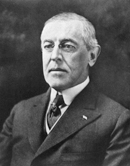
As much as I hope that Mr.Obama will be re-elected, one must always be aware that things can change, stranger events have happened in the recent past and if someone like Bush 2 the shrub can be elected...even for a second term, than anything is possible.
Much to my own surprise I see Mr. Gingrich, the obstructionist,speaker of days gone by, slowly emerging as a credible candidate...if the republicans should be in the position to elect the next president.
The man appears to have a good grasp of history, especially in the middle east region.
Palestine is not a country and never has been a country he says. And of course he is right.
The once mighty Ottoman Empire was friendly with the German Reich (1871-1918) and after the armistice somehow or other the British, France and the USA were involved to a lesser extend decided to create a bunch of kings or regents to manage most of the orphans of the former Ottoman Empire, which was now reduced to Turkey.
Most of these puppet kings have by now disappeared, replaced one by one by emerging army commanders who took over as dictators and have only recently been killed or turned out of office.
There are a few of them left, one being Saudi Arabia, from Ibn Saud the self declared king the regime has grown to a royal family of about 6,000.
Ibn Saud apparently pointed out to Roosevelt that there were huge oil reserves available to the USA. The president remarked, we have Texas....of course that was in 1944 and long before Onassis started building supertankers as the Texas reserves started to be depleted.
my view on world events...now, and past. Content is copyright to its owners. If you own rights to any of the images on my blog and do not wish for them to appear contact me and I'll remove them.
2.1.12
31.12.11
Iraq, the war is over...
To truly honor those brave men and women in uniform – and, even more
because there are more of them — the millions of Iraqis whose lives we
destroyed, Americans need to look unflinchingly at this dreadful
war.
They need to look at the ignorant, twisted and duplicitous men and women who started it, at the institutions that failed to stop it, and at their own complicity in it. Above all, they need to look at its terrible toll.
We need to remember that this war was launched under false pretenses ( this is a link click on it for details ) by an administration that used fake evidence to push it through. Americans need to remember their own understandable fear after 9/11, and how they allowed cunning and manipulative ideologues to exploit it.
We need to remember that the institutions that should have resisted the war – Congress and the media – completely failed to do so. Drugged by post-9/11 patriotism and groupthink, America’s representatives and their journalists abandoned their posts at the crucial hour.
They need to look at the ignorant, twisted and duplicitous men and women who started it, at the institutions that failed to stop it, and at their own complicity in it. Above all, they need to look at its terrible toll.
We need to remember that this war was launched under false pretenses ( this is a link click on it for details ) by an administration that used fake evidence to push it through. Americans need to remember their own understandable fear after 9/11, and how they allowed cunning and manipulative ideologues to exploit it.
We need to remember that the institutions that should have resisted the war – Congress and the media – completely failed to do so. Drugged by post-9/11 patriotism and groupthink, America’s representatives and their journalists abandoned their posts at the crucial hour.
we the people...where were we when we allowed this idiotic war by Bush...?
Yes, the US
politicians and US corporate media lied from start to finish on this hideous
occupation of Iraq. And they show no
signs of stopping, and no signs of noting how TENS OF MILLIONS of lives were
damaged forever.
21.12.11
USA, trouble piles up
Cincinnati Ohio, hundreds of homes have been torn down, perfectly good houses, fully inhabitable most of them in decent and generally nice neighborhoods.
Many of these homes sold about 10 or 12 years back in the range of 75 to about 150,000 Dollars. Resale homes less than 50 years old.
Somehow or other these places were refinanced in the recent ridiculous housing boom and many of these family homes ended up with bank loan mortgages of about double of what these places were worth.
Then came the big bust, Federal agencies like Freddy Mac and Fanny Mae needed to be bailed out and the old administrations buried their head in the sand. Foreclosures by the banks and evictions followed and in some neighborhoods as many as one out of five homes were abandoned by the owners many even prior to the eviction proceedings.
Vandals and thieves rip these places apart, taking things like siding (scrap), plumbing-copper, air conditioners,kitchen and bathroom fixtures, pretty well anything they can strip of the place and leave the bank owned places as junk piles.
The city,towns,municipalities to avoid having these areas fall into total slums are ripping these homes down and selling the lots cheaply to the next door neighbours.
Sadly beacuse of the inaction of some form of governing body to stop this criminal nonsense thousands of these useful and needed homes will disappear. The municipality is not only stuck with the loss of tax revenue for these homes but as well are covering the costly expense of cleaning up and demolishing these homes.
Some efforts are made to rent or sell homes cheap but with more than 10,000 units in this precarious situation this scene looks like a disaster in the works.
Apparently, Detroit Michigan faced with a similar situation recently ended up giving free homes to police and firemen, homes in the city, with the aim of keeping them in decent repair.
Many of these homes sold about 10 or 12 years back in the range of 75 to about 150,000 Dollars. Resale homes less than 50 years old.
Somehow or other these places were refinanced in the recent ridiculous housing boom and many of these family homes ended up with bank loan mortgages of about double of what these places were worth.
Then came the big bust, Federal agencies like Freddy Mac and Fanny Mae needed to be bailed out and the old administrations buried their head in the sand. Foreclosures by the banks and evictions followed and in some neighborhoods as many as one out of five homes were abandoned by the owners many even prior to the eviction proceedings.
Vandals and thieves rip these places apart, taking things like siding (scrap), plumbing-copper, air conditioners,kitchen and bathroom fixtures, pretty well anything they can strip of the place and leave the bank owned places as junk piles.
The city,towns,municipalities to avoid having these areas fall into total slums are ripping these homes down and selling the lots cheaply to the next door neighbours.
Sadly beacuse of the inaction of some form of governing body to stop this criminal nonsense thousands of these useful and needed homes will disappear. The municipality is not only stuck with the loss of tax revenue for these homes but as well are covering the costly expense of cleaning up and demolishing these homes.
Some efforts are made to rent or sell homes cheap but with more than 10,000 units in this precarious situation this scene looks like a disaster in the works.
Apparently, Detroit Michigan faced with a similar situation recently ended up giving free homes to police and firemen, homes in the city, with the aim of keeping them in decent repair.
...you can buy or rent some of these homes from 400 to 600 Dollars a month.....
19.12.11
Remember...what's his name?
Remember back when President and Alzheimer's Poster Boy Reagan,
grade B actor president, the Great Communicator, had his shaky finger on that
red telephone in the oval office. The red telephone with the red button on
it--isn't that the way it worked?--Ronnie hits that red button and Armageddon
begins--and back then I imagined old Ronnie Reagan waking up in the middle of
the night in a bit of an Alzheimer fog and imagining the Soviets had fired a
missile at the White House--"Mommy, wake up, help me down to the Ovaltine office
so I can get on that red phone and warn the Air Force, like I did in...Mommy,
what was that movie where I was an Air Force hero?...er-ah...." "Oh, Ronnie,
relax you've had another nightmare
Jimmy Carter and the Shaw of Iraq
an article from 2004,worth reading...who knows.
Strong
intelligence has begun to emerge that US President Jimmy Carter attempted to
demand financial favors for his political friends from the Shah of Iran. The
rejection of this demand by the Shah could well have led to Pres. Carter’s
resolve to remove the Iranian Emperor from office. 1 GIS. The linkage between
the destruction of the Shah’s Government — directly attributable to Carter’s
actions — and the Iran-Iraq war which cost millions of dead and injured on both
sides, and to the subsequent rise of radical Islamist terrorism makes the new
information of considerable significance. Pres. Carter’s anti-Shah feelings
appeared to have ignited after he sent a group of several of his friends from
his home state, Georgia, to Tehran with an audience arranged with His Majesty
directly by the Oval Office and in Carter’s name. At this meeting, as reported
by Prime Minister Amir Abbas Hoveyda to some confidantes, these businessmen told
the Shah that Pres. Carter wanted a contract. previously awarded to Brown &
Root to build a huge port complex at Bandar Mahshahr, to be cancelled and as a
personal favor to him to be awarded to the visiting group at 10 percent above
the cost quoted by Brown & Root. The group would then charge the 10 percent
as a management fee and supervise the project for Iran, passing the actual
construction work back to Brown & Root for implementation, as previously
awarded. They insisted that without their management the project would face
untold difficulties at the US end and that Pres. Carter was “trying to be
helpful”. They told the Shah that in these perilous political times, he should
appreciate the favor which Pres. Carter was doing him. According to Prime
Minister Hoveyda, the Georgia visitors left a stunned monarch and his bewildered
Prime Minister speechless, other than to later comment among close confidantes
about the hypocrisy of the US President, who talked glibly of God and religion
but practiced blackmail and extortion through his emissaries. The multi-billion
dollar Bandar Mahshahr project would have made 10 percent “management fee” a
huge sum to give away to Pres. Carter’s friends as a favor for unnecessary
services. The Shah politely declined the “personal” management request which had
been passed on to him. The refusal appeared to earn the Shah the determination
of Carter to remove him from office. Carter subsequently refused to allow tear
gas and rubber bullets to be exported to Iran when anti-Shah rioting broke out,
nor to allow water cannon vehicles to reach Iran to control such outbreaks,
generally instigated out of the Soviet Embassy in Tehran. There was speculation
in some Iranian quarters — as well as in some US minds — at the time and later
that Carter’s actions were the result of either close ties to, or empathy for,
the Soviet Union, which was anxious to break out of the longstanding US-led
strategic containment of the USSR, which had prevented the Soviets from reaching
the warm waters of the Indian Ocean. Sensing that Iran’s exports could be
blocked by a couple of ships sunk in the Persian Gulf shipping lanes, the Shah
planned a port which would have the capacity to handle virtually all of Iran’s
sea exports unimpeded. Contrary to accusations leveled at him about the huge,
“megalomaniac” projects like Bandar Mahshahr, these served as a means to provide
jobs for a million graduating high school students every year for whom there
were no university slots available. Guest workers, mostly from Pakistan and
Afghanistan were used to start and expand the projects and Iranians replaced the
foreigners as job demand required, while essential infrastructure for Iran was
built ahead of schedule. In late February 2004, Islamic Iran’s Deputy Minister
of Economy stated that the country needed $18-billion a year to create
one-million jobs and achieve economic prosperity. And at the first job creation
conference held in Tehran’s Amir Kabir University, Iran’s Student News Agency
estimated the jobless at some three-million. Or a budget figure of $54-billion
to deal with the problem. Thirty years earlier, the Shah had already taken steps
to resolve the same challenges, which were lost in the revolution which had been
so resolutely supported by Jimmy Carter. A quarter-century after the toppling of
the Shah and his Government by the widespread unrest which had been largely
initiated by groups with Soviet funding — but which was, ironically, to bring
the mullahs rather than the radical-left to power — Ayatollah Shariatmadari’s
warning that the clerics were not equipped to run the country was echoed by the
Head of Islamic Iran’s Investment Organization, who said: “We are hardly
familiar with the required knowledge concerning the proper use of foreign
resources both in State and private sectors, nor how to make the best use of
domestic resources.” Not even after 25 years. Historians and observers still
debate Carter’s reasons for his actions during his tenure at the White House,
where almost everything, including shutting down satellite surveillance over
Cuba at an inappropriate time for the US, seemed to benefit Soviet aims and
policies. Some claim he was inept and ignorant, others that he was allowing his
liberal leanings to overshadow US national interests. The British Foreign &
Commonwealth Office had enough doubts in this respect, even to the extent of
questioning whether Carter was a Russian mole, that they sent around 200
observers to monitor Carter’s 1980 presidential campaign against Ronald Reagan
to see if the Soviets would try to “buy” the presidency for Carter. In the
narrow aspect of Carter setting aside international common sense to remove the
US’ most powerful ally in the Middle East, this focused change was definitely
contrary to US interests and events over the next 25 years proved this.
According to Prime Minister Hoveyda, Jimmy Carter’s next attack on the Shah was
a formal country to country demand that the Shah sign a 50-year oil agreement
with the US to supply oil at a fixed price of $8 a barrel. No longer couched as
a personal request, the Shah was told he should heed the contract proposal if he
wished to enjoy continued support from the US. In these perilous, political
times which, could become much worse. Faced with this growing pressure and
threat, the monarch still could not believe that Iran, the staunchest US ally in
the region, other than Israel, would be discarded or maimed so readily by
Carter, expecting he would be prevailed upon by more experienced minds to avoid
destabilizing the regional power structure and tried to explain his position.
Firstly, Iran did not have 50-years of proven oil reserves that could be covered
by a contract. Secondly, when the petrochemical complex in Bandar Abbas, in the
South, was completed a few years later, each barrel of oil would produce $1,000
worth of petrochemicals so it would be treasonous for the Shah to give oil away
for only $8. Apologists, while acknowledging that Carter had caused the
destabilization of the monarchy in Iran, claim he was only trying to salvage
what he could from a rapidly deteriorating political situation to obtain maximum
benefits for the US. But, after the Shah was forced from the throne, Carter’s
focused effort to get re-elected via the Iran hostage situation points to less
high minded motives. Rumor has always had it that Carter had tried to negotiate
to have the US hostages, held for 444 days by the Islamic Republic which he had
helped establish in Iran, released just before the November 1980 election date,
but that opposition (Republican) candidate Ronald Reagan had subverted, taken
over and blocked the plan. An eye-witness account of the seizure by “students”
of the US Embassy on November 4, 1979, in Tehran confirms a different scenario.
The mostly “rent-a-crowd” group of “students” organized to climb the US Embassy
walls was spearheaded by a mullah on top of a Volkswagen van, who with a two-way
radio in one hand and a bullhorn in the other, controlled the speed of the march
on the Embassy according to instructions he received over the radio. He would
slow it down, hurry it up and slow it down again in spurts and starts,
triggering the curiosity of an educated pro-Khomeini vigilante, who later told
the story to a friend in London. When asked by the vigilante for the reason of
this irregular movement, the stressed cleric replied that he had instructions to
provide the US Embassy staff with enough time to destroy their most sensitive
documents and to give the three most senior US diplomats adequate opportunity to
then take refuge at the Islamic Republic Foreign Ministry rather than be taken
with the other hostages. Someone at the Embassy was informing the Foreign
Ministry as to progress over the telephone and the cleric was being told what to
do over his radio. The vigilante then asked why the Islamic Government would
bother to be so accommodating to the Great Satan and was told that the whole
operation was planned in advance by Prime Minister Mehdi Bazargan’s
revolutionary Government with Pres. Carter in return for Carter having helped
depose the Shah and that this was being done to ensure Carter got re-elected.
“He helped us, now we help him” was the matter-of-fact comment from the cleric.
In 1978 while the West was deciding to remove His Majesty Mohammad Reza Shah
Pahlavi from the throne, Shariatmadari was telling anyone who would listen not
to allow “Ayatollah” Ruhollah Khomeini and his velayat faghih (Islamic jurist)
version of Islam to be allowed to govern Iran. Ayatollah Shariatmadari noted:
“We mullahs will behave like bickering whores in a brothel if we come to power
... and we have no experience on how to run a modern nation so we will destroy
Iran and lose all that has been achieved at such great cost and effort.” 2.
Pres. Carter reportedly responded that Khomeini was a religious man — as he
himself claimed to be — and that he knew how to talk to a man of God, who would
live in the holy city of Qom like an Iranian “pope” and act only as an advisor
to the secular, popular revolutionary Government of Mehdi Bazargan and his group
of anti-Shah executives, some of whom were US-educated and expected to show
preferences for US interests. Carter’s mistaken assessment of Khomeini was
encouraged by advisors with a desire to form an Islamic “green belt” to contain
atheist Soviet expansion with the religious fervor of Islam. Eventually all 30
of the scenarios on Iran presented to Carter by his intelligence agencies proved
wrong, and totally misjudged Khomeini as a person and as a political entity.
Today, Iranian-born, Grand Ayatollah Ali Al-Sistani, the dominant Shia leader in
Iraq faces Shariatmadari’s dilemma and shares the same “quietist” Islamic
philosophy of sharia (religious law) guidance rather than direct governing by
the clerics themselves. Sistani’s “Khomeini” equivalent, militant Ayatollah
Mohammed Baqir al-Sadr, was gunned down in 1999 by then-Iraqi Pres. Saddam
Hussein’s forces. Sadr’s son, 30-year-old Muqtada al-Sadr, lacks enough
followers or religious seniority/clout to immediately oppose Sistani but has a
hard core of violent followers biding their time. According to all estimates,
the young Sadr waits for the June 2004 scheduled handover of power in Iraq,
opening the way for serious, militant intervention on his side by Iranian
clerics. The Iranian clerical leaders, the successors to Khomeini, see, far more
clearly than US leaders and observers, the parallels between 1979-80 and 2004:
as a result, they have put far more effort into activities designed to ensure
that “Reagan’s successor”, US Pres. George W. Bush, does not win power.
Footnotes: 1. © 2004 Alan Peters. The name “Alan Peters” is a nom de plume for a
writer who was for many years involved in intelligence and security matters in
Iran. He had significant access inside Iran at the highest levels during the
rule of the Shah, until early 1979. 2. See Defense & Foreign Affairs Daily,
March 2, 2004: Credibility and Legitimacy of Ruling Iranian Clerics Unraveling
as Pressures Mount Against Them; The Source of Clerical Ruling Authority Now
Being Questioned. This report, also by Alan Peters, details the background of
“Ayatollah” Khomeini, the fact that his qualifications for his religious title
were not in place, and the fact that he was not of Iranian origin.
Korea
...beloved leader ...Kim Jong Il, 69 the Leader of communist Korea, North Korea.
Leader of a repressive regime, population of about 23 million this fellow just died, apparently of a hearth attack a few days back.
His youngest son...28, a four star general is supposed to be taking over,third generation dictator if the clique running the country approves this fellow.
Leader of a repressive regime, population of about 23 million this fellow just died, apparently of a hearth attack a few days back.
His youngest son...28, a four star general is supposed to be taking over,third generation dictator if the clique running the country approves this fellow.
16.12.11
Democracy today
The results of the Economist Intelligence Unit’s Democracy Index 2011 show that democracy has been under stress in many parts of the world. The state of democracy deteriorated in 48 countries during 2011, out of the 167 that are covered by the index. In only 41 countries did the state of democracy improve, with it remaining unchanged in a further 78. In most regions the level of democracy, as measured by the average democracy score in the index, is lower in 2011 than in 2010. This deterioration was seen not just in emerging markets, but in the developed countries of North America and Western Europe. There was also a decline in the level of democracy in Eastern Europe and small deteriorations in both Asia and Latin America. These were offset by increases in the level of democracy in the Middle East and North Africa (MENA) and Sub-Saharan Africa.
According to Laza Kekic, the Economist Intelligence Unit's Director for Country Forecasting Services and main editor of the report, "2011 was an exceptionally turbulent year, characterised by sovereign debt crises and weak political leadership in the developed world, dramatic political change and conflict in the Middle East and North Africa (MENA), and rising social unrest. It featured important changes in democracy, both in the direction of unexpected democratisation and a continuation of decline in democracy in some parts of the world."
The unprecedented rise of movements for democratic change across the Arab world a year ago led many to expect a new wave of democratisation. But it soon became apparent that the revolutions in Tunisia and Egypt would not be repeated so easily elsewhere and that democracy remained a highly uncertain prospect. Many MENA autocracies resorted to a mix of repression and cosmetic changes, although the improvements in Tunisia, Egypt and Libya were sufficient to lift the region overall.
More generally, global backsliding in democracy has been evident for some years and strengthened in the wake of the 2008-09 global economic crisis. Between 2006 and 2008 democratisation stalled; between 2008 and 2010 there was a deterioration across the world. In 2011, however, the decline was concentrated in Europe.
Erosion of democracy in Europe
In Western Europe, there has been a significant erosion in democracy in recent years. Seven countries experienced a deterioration in 2011; none had an improvement. The main reason has been the erosion of sovereignty and democratic accountability associated with the effects of and responses to the euro zone crisis (five of the countries that experienced a decline in their scores are members of the euro zone—Greece, Italy, Portugal, Spain and Ireland). Most dramatically, in two countries (Greece and Italy) democratically elected leaders have been replaced by technocrats.
The near-term political outlook for Europe is disturbing. The European project is under serious threat and disputes within the EU are sharp. Harsh austerity, a new recession in 2012, high unemployment and little sign of renewed growth will test the resilience of Europe's political institutions.
The overall Democracy Index is based on scores for five different categories: electoral process and pluralism; civil liberties; the functioning of government; political participation; and political culture. The Index measures the state of democracy in 165 independent states and two territories, which account for almost the entire population of the world. Countries are placed within one of four types of regimes: “full democracies”, “flawed democracies”, “hybrid regimes” and “authoritarian regimes”.
Eight countries had a change in regime type in 2011. In four there was a deterioration and four had an upgrade. Portugal deteriorated from a "full democracy" to a "flawed democracy", a development that had already affected Greece, Italy and France in 2010. Ukraine and Guatemala regressed from flawed democracies to hybrid regimes, and in Russia a long process of regression culminated in a move from a hybrid to an authoritarian regime in the light of the cynical decision by Vladimir Putin to return to the presidency and because of deeply flawed parliamentary elections.
Tunisia experienced the biggest increase of any country in its democracy score in 2011. It moved from an authoritarian to a hybrid regime. Two Sub-Saharan African countries also moved from authoritarian to hybrid regimes (Mauritania and Niger), and Zambia improved from a hybrid to a flawed democracy.
Results for 2011
• Just over one-half of the world’s population lives in a democracy of some sort, although only 11% reside in “full democracies”. More than one-third of the world’s population still lives under authoritarian rule.
• Although almost one-half of the world's countries can be considered democracies, the number of "full democracies" is low (only 25); 53 are rated as "flawed democracies". Of the remaining 89 states, 52 are authoritarian and 37 are considered to be "hybrid regimes".
• Popular confidence in political institutions continues to decline in many countries.
• Mounting social unrest could pose a threat to democracy in some countries.
• Eastern Europe experienced another decline in democracy in 2011, with 12 countries experiencing a deterioration.
• US democracy has been adversely affected by a deepening of the polarisation of the political scene, and political brinkmanship and paralysis.
• The US and the UK remain at the bottom end of the full democracy category. There has been a rise in protest movements. Problems in the functioning of government have become more prominent.
• Although extremist political forces in Europe have not yet profited from economic dislocation as might have been feared, populism and anti-immigrant sentiment are on the rise.
• Rampant crime in some countries—in particular, violence and drug-trafficking—continues to have a negative impact on democracy in Latin America.
The Economist Intelligence Unit's Democracy Index 2011
is available free of charge at: www.eiu.com/democracyindex2011
According to Laza Kekic, the Economist Intelligence Unit's Director for Country Forecasting Services and main editor of the report, "2011 was an exceptionally turbulent year, characterised by sovereign debt crises and weak political leadership in the developed world, dramatic political change and conflict in the Middle East and North Africa (MENA), and rising social unrest. It featured important changes in democracy, both in the direction of unexpected democratisation and a continuation of decline in democracy in some parts of the world."
The unprecedented rise of movements for democratic change across the Arab world a year ago led many to expect a new wave of democratisation. But it soon became apparent that the revolutions in Tunisia and Egypt would not be repeated so easily elsewhere and that democracy remained a highly uncertain prospect. Many MENA autocracies resorted to a mix of repression and cosmetic changes, although the improvements in Tunisia, Egypt and Libya were sufficient to lift the region overall.
More generally, global backsliding in democracy has been evident for some years and strengthened in the wake of the 2008-09 global economic crisis. Between 2006 and 2008 democratisation stalled; between 2008 and 2010 there was a deterioration across the world. In 2011, however, the decline was concentrated in Europe.
Erosion of democracy in Europe
In Western Europe, there has been a significant erosion in democracy in recent years. Seven countries experienced a deterioration in 2011; none had an improvement. The main reason has been the erosion of sovereignty and democratic accountability associated with the effects of and responses to the euro zone crisis (five of the countries that experienced a decline in their scores are members of the euro zone—Greece, Italy, Portugal, Spain and Ireland). Most dramatically, in two countries (Greece and Italy) democratically elected leaders have been replaced by technocrats.
The near-term political outlook for Europe is disturbing. The European project is under serious threat and disputes within the EU are sharp. Harsh austerity, a new recession in 2012, high unemployment and little sign of renewed growth will test the resilience of Europe's political institutions.
The overall Democracy Index is based on scores for five different categories: electoral process and pluralism; civil liberties; the functioning of government; political participation; and political culture. The Index measures the state of democracy in 165 independent states and two territories, which account for almost the entire population of the world. Countries are placed within one of four types of regimes: “full democracies”, “flawed democracies”, “hybrid regimes” and “authoritarian regimes”.
Eight countries had a change in regime type in 2011. In four there was a deterioration and four had an upgrade. Portugal deteriorated from a "full democracy" to a "flawed democracy", a development that had already affected Greece, Italy and France in 2010. Ukraine and Guatemala regressed from flawed democracies to hybrid regimes, and in Russia a long process of regression culminated in a move from a hybrid to an authoritarian regime in the light of the cynical decision by Vladimir Putin to return to the presidency and because of deeply flawed parliamentary elections.
Tunisia experienced the biggest increase of any country in its democracy score in 2011. It moved from an authoritarian to a hybrid regime. Two Sub-Saharan African countries also moved from authoritarian to hybrid regimes (Mauritania and Niger), and Zambia improved from a hybrid to a flawed democracy.
Results for 2011
• Just over one-half of the world’s population lives in a democracy of some sort, although only 11% reside in “full democracies”. More than one-third of the world’s population still lives under authoritarian rule.
• Although almost one-half of the world's countries can be considered democracies, the number of "full democracies" is low (only 25); 53 are rated as "flawed democracies". Of the remaining 89 states, 52 are authoritarian and 37 are considered to be "hybrid regimes".
• Popular confidence in political institutions continues to decline in many countries.
• Mounting social unrest could pose a threat to democracy in some countries.
• Eastern Europe experienced another decline in democracy in 2011, with 12 countries experiencing a deterioration.
• US democracy has been adversely affected by a deepening of the polarisation of the political scene, and political brinkmanship and paralysis.
• The US and the UK remain at the bottom end of the full democracy category. There has been a rise in protest movements. Problems in the functioning of government have become more prominent.
• Although extremist political forces in Europe have not yet profited from economic dislocation as might have been feared, populism and anti-immigrant sentiment are on the rise.
• Rampant crime in some countries—in particular, violence and drug-trafficking—continues to have a negative impact on democracy in Latin America.
The Economist Intelligence Unit's Democracy Index 2011
is available free of charge at: www.eiu.com/democracyindex2011
9.12.11
Israel,Palestine,Syria
A few weeks ago one kept on hearing people say that peace between Syria and Israel
was possible and within grasp. It's no secret that former PM Olmert pushed for a
deal, though how strong he did and if it could even be OK ed in the Knesset is
another matter entirely. The general shape of the deal would be peace between
Israel whereby the Golan Heights would be returned to Syria, and, in exchange,
Syria would sever its ties with Iran and stop arming Hezbollah. Basically it's a
land-for-peace deal with some broader Middle East positioning thrown
in.
Such a deal would be immensely beneficial for Syria, which has long demanded the Golan, having claimed to reacquire it by any means possible. However, for Israel, this deal makes no sense whatsoever, with perhaps one possible exception.
There are many obvious reason for not giving back the Golan from the Israeli perspective: it's an excellent military position, it gives Israel complete control of Lake Kinneret (the Sea of Galilee), and the general fact that countries should never give up land unless they absolutely have to. Land is a country's most valuable resource, and the Golan is especially fertile land, a relative rarity in Israel. Not to mention the fact that Israel isn't exactly a huge country - giving up the Golan would amount to about an 8% reduction in territory, which is a huge economic and militaristic loss.
However, let us suppose that Israel was given such a tempting offer, no rockets from Hezbollah and Iranian isolation. Would it make sense for Israel to give up this land for peace?
It is doubtful, and one answer is simple: once the government leaves the Golan they will not enter it again without force. Possession is key here, and while it is hard to walk away from a huge chunk of fertile land, it is even harder to ensure that what you walked away from will be delivered. In essence, Israel has no reason to trust Syria that it will keep up its end of the bargain, and even less reason to believe that even if Syria stops arming Hezbollah, they won't get their rockets from somewhere else.
It's not land-for-peace, it's land-for-promises, which are far less valuable than possession. Israel would be crazy to trust Syria, bearing in mind that if they're ever double-crossed their only option is a full-scale invasion of the Golan, which absolutely no one would want.
Such a deal would be immensely beneficial for Syria, which has long demanded the Golan, having claimed to reacquire it by any means possible. However, for Israel, this deal makes no sense whatsoever, with perhaps one possible exception.
There are many obvious reason for not giving back the Golan from the Israeli perspective: it's an excellent military position, it gives Israel complete control of Lake Kinneret (the Sea of Galilee), and the general fact that countries should never give up land unless they absolutely have to. Land is a country's most valuable resource, and the Golan is especially fertile land, a relative rarity in Israel. Not to mention the fact that Israel isn't exactly a huge country - giving up the Golan would amount to about an 8% reduction in territory, which is a huge economic and militaristic loss.
However, let us suppose that Israel was given such a tempting offer, no rockets from Hezbollah and Iranian isolation. Would it make sense for Israel to give up this land for peace?
It is doubtful, and one answer is simple: once the government leaves the Golan they will not enter it again without force. Possession is key here, and while it is hard to walk away from a huge chunk of fertile land, it is even harder to ensure that what you walked away from will be delivered. In essence, Israel has no reason to trust Syria that it will keep up its end of the bargain, and even less reason to believe that even if Syria stops arming Hezbollah, they won't get their rockets from somewhere else.
It's not land-for-peace, it's land-for-promises, which are far less valuable than possession. Israel would be crazy to trust Syria, bearing in mind that if they're ever double-crossed their only option is a full-scale invasion of the Golan, which absolutely no one would want.
7.12.11
America....what's in the name?
In this region of the world we use a word every day and yet, few of us either know,or care about it's origin. The word: America.
The USA is generally referred to as America, its inhabitants are proud to be Americans.
In fact, the name, it appears was first used by a German mapmaker crediting some of the information and graphic details to a traveler explorer who's name was placed on this new map.
America; the name... a German connection
The USA is generally referred to as America, its inhabitants are proud to be Americans.
In fact, the name, it appears was first used by a German mapmaker crediting some of the information and graphic details to a traveler explorer who's name was placed on this new map.
America; the name... a German connection
A work of art the above map was originally produced by a German Artist, a fellow named Waldesmueller, a painter and mapmaker.It should be one of the most important pieces of art in North and or South America.
The obscure map is based on the travels and explorations of an Italian monk, his name was Amerigo Vespucci. The artist put the monk-explorer-travelers name somewhere on the American map in the area which is now known a Paraguay.(1507 about, and only a few years after Columbus/ Colon discovered what he believed to be India).
The work of art clearly depicts India on the left side as being totally separate from the newly found continent. This was indeed the first time ever that the American continent, in this case mostly south America was shown as a distinctly separate continent, of course the great distance to Asia ( Indian ocean) was not known at that time.
Much later, the French...and then the English started to explore the Northern regions, building on the information already established by the Spanish and Portuguese, but the name, America was adopted , hence South and North America.
...and here, a picture of Martin Waldseemueller, the man mostly credited with creating the name for the new world America.
Much later, the French...and then the English started to explore the Northern regions, building on the information already established by the Spanish and Portuguese, but the name, America was adopted , hence South and North America.
...and here, a picture of Martin Waldseemueller, the man mostly credited with creating the name for the new world America.
6.12.11
whats...up, something on the lighter side
There is a two-letter word that perhaps has more meanings than any other two-letter word, and that is 'UP.'
It's easy to understand UP, meaning toward the sky or at the top of the list, but when we awaken in the morning, why do we wake UP ?
At a meeting, why does a topic come UP?
Why do we speak UP and why are the officers UP for election and why is it UP to the secretary to write UP a report?
We call UP our friends.
And we use it to brighten UP a room, polish UP the silver; we warm UP the leftovers and clean UP the kitchen.
We lock UP the house and some guys fix UP the old car.
At other times the little word has real special meaning..
People stir UP trouble, line UP for tickets, work UP an appetite, and think UP excuses.
To be dressed is one thing, but to be dressed UP is special..
A drain must be opened UP because it is stopped UP.
We open UP a store in the morning but we close it UP at night.
We seem to be pretty mixed UP about UP!
To be knowledgeable about the proper uses of UP, look the word UP in the dictionary.
In a desk-sized dictionary, it takes UP almost 1/4th of the page and can add UP to about thirty definitions.
If you are UP to it, you might try building UP a list of the many ways UP is used.
It will take UP a lot of your time, but if you don't give UP, you may wind UP with a hundred or more.
When it threatens to rain, we say it is clouding UP.
When the sun comes out we say it is clearingUP.
When it rains, it wets the earth and often messes things UP.
When it doesn't rain for awhile, things dry UP.
One could go on and on, but I'll wrap it UP,
When it rains, it wets the earth and often messes things UP.
When it doesn't rain for awhile, things dry UP.
One could go on and on, but I'll wrap it UP,
for now my time is UP,
so........it is time to shut UP!
Now it's UP to you what you do with this.........
America....again, just to explain why...
Gingrich the obstructionist is getting more popular by the day..the comeback kid I guess. It may not be a bad ticket for him and Michel Bachman to be the Republican competitors. I very much hope that Mr. Obama will be re-elected, but just in case he is not ( provided he runs again to begin with) Gingrich-Bachman would not be a bad combo, stranger things have happened.
No matter what...just keep Sarah out of it...get her to have someone write another book..anything, but keep her away. Can you imagine this fellow McCain and Sarah Palin in office, there would be two other wars raging by now, one with North Korea and the other with Iran for sure. It must be noted here that the Obama administration managed to a large extend to stay out of the current disaster region in north Africa involving the Mediterranean rim countries and the demise of the nut in Libya
Re my last post, there is something I should explain a little. It's important to me, I most certainly do not want to look or act anti American. That would be a mistake and is not my intention whatsoever." Yes But". Incredible advances have been made in the year since WWII, in science, technology, medicine, you name it. We've been to the moon and, yes, somehow we managed not to use any of these horrible atomic bombs against one another. There are thousands of these things around and everything possible should be done to reduce or eliminate this horrendous possibility of an unbelievable disaster. The financial woes in the USA as well as the so called Euro crisis if not appropriately managed could eventually result in a situation where mob on the streets although many with good intentions could well effect the orderly management by governments and the democratically elected representatives of the people. We have seen this in the thirties when the unrest of a kicked in the butt country, Germany, gave way to what was called as National Socialistic state who quickly eliminated any and all opposition and eventually ended up with this fellow Hitler playing Napoleon.
What followed, from 1945 til 48 was in my view a scene of mass murder literally starving the population to death and the treatment of the German prisoners of war was only one phase of this vulgar scene of genocide.
The second world war, or the end of it,the French had there little revenge,I was witness of it, the English lost their empire but managed to create Israel and put a number of fake Kings into the middle east circus. Russia grabbed parts of Germany and Poland. Poland was rewarded with parts of what was Germany ( Danzig region)...and America, the winner in this whole disastrous mess got itself out of the depression it was in.
The Marshal Plan ( Truman administration ) helped to keep the US economy going instead of coming to a slowdown or dead stop at the end of the war.
No matter what...just keep Sarah out of it...get her to have someone write another book..anything, but keep her away. Can you imagine this fellow McCain and Sarah Palin in office, there would be two other wars raging by now, one with North Korea and the other with Iran for sure. It must be noted here that the Obama administration managed to a large extend to stay out of the current disaster region in north Africa involving the Mediterranean rim countries and the demise of the nut in Libya
Re my last post, there is something I should explain a little. It's important to me, I most certainly do not want to look or act anti American. That would be a mistake and is not my intention whatsoever." Yes But". Incredible advances have been made in the year since WWII, in science, technology, medicine, you name it. We've been to the moon and, yes, somehow we managed not to use any of these horrible atomic bombs against one another. There are thousands of these things around and everything possible should be done to reduce or eliminate this horrendous possibility of an unbelievable disaster. The financial woes in the USA as well as the so called Euro crisis if not appropriately managed could eventually result in a situation where mob on the streets although many with good intentions could well effect the orderly management by governments and the democratically elected representatives of the people. We have seen this in the thirties when the unrest of a kicked in the butt country, Germany, gave way to what was called as National Socialistic state who quickly eliminated any and all opposition and eventually ended up with this fellow Hitler playing Napoleon.
What followed, from 1945 til 48 was in my view a scene of mass murder literally starving the population to death and the treatment of the German prisoners of war was only one phase of this vulgar scene of genocide.
The second world war, or the end of it,the French had there little revenge,I was witness of it, the English lost their empire but managed to create Israel and put a number of fake Kings into the middle east circus. Russia grabbed parts of Germany and Poland. Poland was rewarded with parts of what was Germany ( Danzig region)...and America, the winner in this whole disastrous mess got itself out of the depression it was in.
The Marshal Plan ( Truman administration ) helped to keep the US economy going instead of coming to a slowdown or dead stop at the end of the war.
5.12.11
America ; the Germans,(DEF)Eisenhower and the disarmed combatants..
Disarmed Enemy Forces (DEF),Surrendered Enemy Forces ,disarmed combatants.. was a U.S. designation, both for soldiers who surrendered to an adversary after hostilities ended, and for those previously surrendered POWs who were held in camps in occupied German territory at the end of WW two.
It is mainly referenced to Dwight D. Eisenhower's designation of German prisoners in post war occupied Germany. Because of the logistical impossibility of feeding millions of surrendered German soldiers at the levels required by the Geneva Convention during the food crisis of 1945, the purpose of the designation—along with the British designation of Surrendered Enemy Personnel (SEP)—was to prevent categorization of the prisoners as Prisoners of War (POW) under the Geneva convention.
German agriculture had suffered extreme productivity decreases in 1944 and 1945. A shortage of synthetic fertilizers had developed after nitrogen and phosphate stocks were channeled into ammunition production. Consequently, crop levels had fallen by 20% to 30% at the end of the war.Allied bombing raids had destroyed thousands of farm buildings, and rendered food processing facilities inoperable. Lack of farm machinery, spare parts, and fertilizer caused an almost total disruption of agriculture when the war was over. After the release of slave laborers that were Russian POWs and Eastern Europeans, extreme agriculture labor shortages existed that could only be relieved by German DEFs and SEPs.. Roving bands of displaced persons and returning soldiers and civilians decimated the hog herds and chicken flocks of German farmers.
In addition, the destroyed German transportation infrastructure created additional logistical nightmares, with railroad lines, bridges, canals and terminals left in ruins. The turnaround time for railroad wagons was five times higher than the prewar average. Of the 15,600 German locomotives, 38.6% were no longer operating and 31% were damaged. Only 1,000 of the 13,000 kilometers of track in the British zone were operable.
By May 8, 1945, the Allies were swamped with 7 million displaced persons in Germany and 1.6 million in Austria, including slave laborers from all over Europe. Soon thereafter, German populations had swollen by 12 to 14.5 million ethnic Germans expelled from Eastern Europe. Bavarian villages in the American zone faced 15% to 25% population increases from displaced persons, with Munich alone having to deal with 75,000 displaced persons.
The worst dislocation of agriculture was caused by the German zonal partitions, which cut off Western Germany from its "breadbasket" of farm lands east of the Oder-Neisse line that had accounted for 35% of Germany's prewar food production and which the Yalta Conference had given to Poland to compensate for lands of Eastern Poland. The Soviet Union, with millions of its own starving citizens at home, was not willing to distribute this production to the population in western Germany. In January 1945, the basic German ration was 1,625 calories/day, and that was further reduced to 1,100 calories by the end of the war in the British zone, and remained at that level into the summer, with levels varying from 840 calories/day in the Ruhr to 1,340 calories/day in Hamburg.The situation was no better in the American zones of Germany and Austria.
These problems combined to create severe shortages what was left of Germany. One summary report estimated that just prior to (V-E) Day, German consumer daily caloric intake was only 1,050, and that after V-E Day it dropped to 860 calories per day, though actual estimates are confusing because of the wide variation by location and because unofficial estimates were usually higher. It was clear by any measure that, by the spring of 1945, the German population was existing on rations that would not sustain life in the long term. A July 1945 CCAC report stated that "the food situation in western Germany is perhaps the most serious problem of the occupation. Average consumption is now about one third below the general accepted subsistence level of 2000 calories per day.
By way of contrast, the nutritional situation in many of Germany's neighbour states was close to pre-war levels and large quantities of food was offered to Germany. However, due to allied restrictions on German trade all the offers were rejected and in one case, this resulted in Holland being forced to destroy a large proportion of their vegetable crop and as late as 1948 Swedish fishermen were still destroying their catch or working only two days a week due to a lack of markets. In August, 1945 the Red Cross shipped 30,000 tons of high protein food parcels by rail to feed displaced persons in Germany but was forced to return them to storage where they eventually spoiled. A further 13.5 million Red Cross rations stockpiled in Europe were confiscated by the military and were never distributed. Senator Kenneth S. Wherry later complained about the thousands upon thousands of tons of rations rotting amid a starving population. Max Huber, head of the International Red Cross, wrote a letter to the U.S. State Department regarding the situation and received a letter in response, signed by Eisenhower, stating that giving Red Cross food to enemy personnel was forbidden.
In the spring of 1946 the International Red Cross was finally allowed to provide limited amounts of food aid to prisoners of war in the U.S. occupation zone.
The number of Germans surrendering to U.S. forces shot up from 313,000 by the end of the first quarter of 1945, to 2.6 million by April 1945 and more than 5 million in May. By April 1945, entire German Army groups were surrendering, which overwhelmed Allied shipping such that German prisoners could no longer be sent to POW camps in America after March 1945. According to a June 22, 1945 announcement by the Allies, a total of 7,614,914 prisoners (of all designations) were held in British and American camps.
Although the British and Americans agreed to split the western Germans who surrendered. the British recanted arguing that they "did not have places to keep them or men to guard them on the continent, and that moving them to England would arouse public resentment and adversely effect British morale.
By June 1, 1945, Eisenhower reported to the War Office that this refusal produced shortages in the 25 million prisoner-day rations which were growing at the rate of 900,000 prisoner-day rations. Feeding this number of people became a logistical nightmare for which frequently had to resort to improvisation.
The original discussion of the Allies treating post Victory in Europe (V-E) Day prisoners of war as something other than those protected by the Geneva Convention had its vague origins in the Casablanca Conference, but it was given specific form by the EAC in the summer of 1944 in a "draft instrument of surrender" given to the American government. The instrument required the surrendering German commander to accept that his men "shall at the discretion of the Commander in Chief of the Armed Forces of the Allied State concerned be declared to be Prisoners of War.Several factors went into this consideration, including that the EAC member the Soviet Union refused to sign the Geneva Conventions, despite intense pressure from 1942 onward to sign the document. Behind the Soviets' refusal were a number of considerations closely linked with the regime, but a major consideration that emerged at the Tehran Conference was that Soviet leader Joseph Stalin desired four million German laborers for an "indefinite period", perhaps for life. The Soviets' refusal to even consider signing the GC created great problems for the EAC, including the fact that a single surrender instrument could not be drafted if a Soviet commander taking the surrender could not possibly commit his government to accord GC rights to prisoners. As a result the EAC instruments promised nothing in that regard, employed awkward and tortured language and made plain the premeditated Allied evasion of the Geneva Convention. In addition, other Allies also considered using Germans for prison labor, which the Germans themselves had already required of prisoners they had held during the war. Later EAC documents described the "Disabled Enemy Forces.
The CCS then cabled British Field Marshal Sir Harold Alexander, supreme Allied Commander in the Mediterranean, suggesting that the same steps be taken regarding the German surrenders in Austria, and then approved Alexander's similar request for a DEF designation, stating "in view of the difficulties regarding food and accommodation, it was so decided."] Eisenhower's JCS superiors ordered him to change German POW's designation to "disarmed enemy forces" (DEFAlexander then requested that the CCS let British forces use such a designation for the surrender of German forces in Italy, the CCS granted his request and the conditions of such surrenders to British commander General Sir William D. Moran almost prevented the surrenders from occurring for worried German troops
By June 22, 1945, of the 7,614,914 prisoners were held in British and American camps, 4,209,000 were soldiers captured before the German capitulation and considered "POWs".This leaves approximately 3.4 million, who according to Allied agreements, were supposed to be split between Britain and the United States. As of June 16, 1945, the U.S. France and the U.K. held a combined total of 7,500,000 German POW's.
The Geneva Convention was amended. Articles 6 and 7 of the Convention relative to the Treatment of Prisoners of War, Geneva July 27, 1929, had covered what may and may not be done to a prisoner on capture. The wording of the 1949 Fourth Geneva Convention was intentionally altered from that of the 1929 convention so that soldiers who "fall into the power" following surrender or mass capitulation of an enemy are now protected as well as those captured in the course of fighting.
Most captives of the Americans and the British were released by the end of 1948, and most of those in French and Soviet captivity were released by the end of 1949, although the last big release occurred in 1956. According to the section of the German Red Cross dealing with tracing the captives, the ultimate fate of 1,300,000 German POW's in Allied custody is still unknown; they are still officially listed as missing.
In his 1989 book Other Losses, James Bacque claimed that Allied Supreme Commander
Dwight Eisenhower deliberately caused the death of 790,000 German captives in internment camps through disease, starvation and cold from 1944 to 1949. Bacque charges that some of these deaths were DEF designated soldiers that could receive harsh treatment because they did not fall within the Geneva Convention protections. Stephen Ambrose, at the time director of the Eisenhower center at the University of Orleans, also organized a conference of eight British, American, and German historians. The result of this conference was a group of papers by these eight historians published in 1992 as the book Eisenhower and the German POWs: Facts against Falsehood which strongly disputes virtually every claim in James Bacque's book, including his categorization of "other losses", their purported origination, Bacque's description of the DEF designation decision, Bacque's oral histories, Bacque's methodologies and Bacque's analysis of World War II documents. Even with regard to the poor conditions of prisoner camps highlighted by Bacque which the panel members agree existed, the New Orleans panel concluded that Bacque raised no new or novel issues that had not been raised since the Maschke Commission findings of the 1960s and 1970s, and studies thereafter that had also chronicled those conditions in far more specific detail.
Current academic consensus regarding the post-war death rate in Allied hands can—mainly based on work such as Ambrose's Eisenhower and the German POWs—be summed up in historian Niall Ferguson's words that Bacque's "calculations grossly exaggerate both the number of Germans the Americans captured and their mortality", although he also notes that "the mortality rate for German POWs in American hands was more than four times higher than the rate for those who surrendered to the British", but that the United States total mortality rate was under 1% and better than every other country in World War II except for the British. Ambrose did concede: "we as Americans can't duck the fact that terrible things happened. And they happened at the end of a war we fought for decency and freedom, and they are not excusable.
It is mainly referenced to Dwight D. Eisenhower's designation of German prisoners in post war occupied Germany. Because of the logistical impossibility of feeding millions of surrendered German soldiers at the levels required by the Geneva Convention during the food crisis of 1945, the purpose of the designation—along with the British designation of Surrendered Enemy Personnel (SEP)—was to prevent categorization of the prisoners as Prisoners of War (POW) under the Geneva convention.
German agriculture had suffered extreme productivity decreases in 1944 and 1945. A shortage of synthetic fertilizers had developed after nitrogen and phosphate stocks were channeled into ammunition production. Consequently, crop levels had fallen by 20% to 30% at the end of the war.Allied bombing raids had destroyed thousands of farm buildings, and rendered food processing facilities inoperable. Lack of farm machinery, spare parts, and fertilizer caused an almost total disruption of agriculture when the war was over. After the release of slave laborers that were Russian POWs and Eastern Europeans, extreme agriculture labor shortages existed that could only be relieved by German DEFs and SEPs.. Roving bands of displaced persons and returning soldiers and civilians decimated the hog herds and chicken flocks of German farmers.
In addition, the destroyed German transportation infrastructure created additional logistical nightmares, with railroad lines, bridges, canals and terminals left in ruins. The turnaround time for railroad wagons was five times higher than the prewar average. Of the 15,600 German locomotives, 38.6% were no longer operating and 31% were damaged. Only 1,000 of the 13,000 kilometers of track in the British zone were operable.
By May 8, 1945, the Allies were swamped with 7 million displaced persons in Germany and 1.6 million in Austria, including slave laborers from all over Europe. Soon thereafter, German populations had swollen by 12 to 14.5 million ethnic Germans expelled from Eastern Europe. Bavarian villages in the American zone faced 15% to 25% population increases from displaced persons, with Munich alone having to deal with 75,000 displaced persons.
The worst dislocation of agriculture was caused by the German zonal partitions, which cut off Western Germany from its "breadbasket" of farm lands east of the Oder-Neisse line that had accounted for 35% of Germany's prewar food production and which the Yalta Conference had given to Poland to compensate for lands of Eastern Poland. The Soviet Union, with millions of its own starving citizens at home, was not willing to distribute this production to the population in western Germany. In January 1945, the basic German ration was 1,625 calories/day, and that was further reduced to 1,100 calories by the end of the war in the British zone, and remained at that level into the summer, with levels varying from 840 calories/day in the Ruhr to 1,340 calories/day in Hamburg.The situation was no better in the American zones of Germany and Austria.
These problems combined to create severe shortages what was left of Germany. One summary report estimated that just prior to (V-E) Day, German consumer daily caloric intake was only 1,050, and that after V-E Day it dropped to 860 calories per day, though actual estimates are confusing because of the wide variation by location and because unofficial estimates were usually higher. It was clear by any measure that, by the spring of 1945, the German population was existing on rations that would not sustain life in the long term. A July 1945 CCAC report stated that "the food situation in western Germany is perhaps the most serious problem of the occupation. Average consumption is now about one third below the general accepted subsistence level of 2000 calories per day.
By way of contrast, the nutritional situation in many of Germany's neighbour states was close to pre-war levels and large quantities of food was offered to Germany. However, due to allied restrictions on German trade all the offers were rejected and in one case, this resulted in Holland being forced to destroy a large proportion of their vegetable crop and as late as 1948 Swedish fishermen were still destroying their catch or working only two days a week due to a lack of markets. In August, 1945 the Red Cross shipped 30,000 tons of high protein food parcels by rail to feed displaced persons in Germany but was forced to return them to storage where they eventually spoiled. A further 13.5 million Red Cross rations stockpiled in Europe were confiscated by the military and were never distributed. Senator Kenneth S. Wherry later complained about the thousands upon thousands of tons of rations rotting amid a starving population. Max Huber, head of the International Red Cross, wrote a letter to the U.S. State Department regarding the situation and received a letter in response, signed by Eisenhower, stating that giving Red Cross food to enemy personnel was forbidden.
In the spring of 1946 the International Red Cross was finally allowed to provide limited amounts of food aid to prisoners of war in the U.S. occupation zone.
Approximately 35 million POWs were taken in World War II, 11 million of them Germans. In addition to 20 million dislocated citizens, the U.S. Army had to cope with most of the surrendered German army. While the Allies had anticipated 3 million surrendering Germans, the actual total was as many as 5 million in American hands by June 1945 out of 7.6 million in northwestern Europe alone, not counting the 1.4 million in Allied hands in Italy. Approximately 1 million were Wehrmacht soldiers fleeing west to avoid capture by the Red Army.
The number of Germans surrendering to U.S. forces shot up from 313,000 by the end of the first quarter of 1945, to 2.6 million by April 1945 and more than 5 million in May. By April 1945, entire German Army groups were surrendering, which overwhelmed Allied shipping such that German prisoners could no longer be sent to POW camps in America after March 1945. According to a June 22, 1945 announcement by the Allies, a total of 7,614,914 prisoners (of all designations) were held in British and American camps.
Although the British and Americans agreed to split the western Germans who surrendered. the British recanted arguing that they "did not have places to keep them or men to guard them on the continent, and that moving them to England would arouse public resentment and adversely effect British morale.
By June 1, 1945, Eisenhower reported to the War Office that this refusal produced shortages in the 25 million prisoner-day rations which were growing at the rate of 900,000 prisoner-day rations. Feeding this number of people became a logistical nightmare for which frequently had to resort to improvisation.
The original discussion of the Allies treating post Victory in Europe (V-E) Day prisoners of war as something other than those protected by the Geneva Convention had its vague origins in the Casablanca Conference, but it was given specific form by the EAC in the summer of 1944 in a "draft instrument of surrender" given to the American government. The instrument required the surrendering German commander to accept that his men "shall at the discretion of the Commander in Chief of the Armed Forces of the Allied State concerned be declared to be Prisoners of War.Several factors went into this consideration, including that the EAC member the Soviet Union refused to sign the Geneva Conventions, despite intense pressure from 1942 onward to sign the document. Behind the Soviets' refusal were a number of considerations closely linked with the regime, but a major consideration that emerged at the Tehran Conference was that Soviet leader Joseph Stalin desired four million German laborers for an "indefinite period", perhaps for life. The Soviets' refusal to even consider signing the GC created great problems for the EAC, including the fact that a single surrender instrument could not be drafted if a Soviet commander taking the surrender could not possibly commit his government to accord GC rights to prisoners. As a result the EAC instruments promised nothing in that regard, employed awkward and tortured language and made plain the premeditated Allied evasion of the Geneva Convention. In addition, other Allies also considered using Germans for prison labor, which the Germans themselves had already required of prisoners they had held during the war. Later EAC documents described the "Disabled Enemy Forces.
With regard to food requirements, regardless of the reasoning or GC legal requirements, the SHAEF was simply not capable of operationally feeding all of the millions of German prisoners at the level of Allied base soldiers because of the high numbers and lack of resources. In a March 10, 1945 cable to the CCS, Eisenhower requested permission for this designation per the earlier EAC documents, and was granted such permission. When the CCS approved Eisenhower's March 1945 request, it added that prisoners after Victory in Europe (V-E Day) should not be declared "Prisoners of War" under the Geneva Convention because of the lack of food.
The CCS then cabled British Field Marshal Sir Harold Alexander, supreme Allied Commander in the Mediterranean, suggesting that the same steps be taken regarding the German surrenders in Austria, and then approved Alexander's similar request for a DEF designation, stating "in view of the difficulties regarding food and accommodation, it was so decided."] Eisenhower's JCS superiors ordered him to change German POW's designation to "disarmed enemy forces" (DEFAlexander then requested that the CCS let British forces use such a designation for the surrender of German forces in Italy, the CCS granted his request and the conditions of such surrenders to British commander General Sir William D. Moran almost prevented the surrenders from occurring for worried German troops
By June 22, 1945, of the 7,614,914 prisoners were held in British and American camps, 4,209,000 were soldiers captured before the German capitulation and considered "POWs".This leaves approximately 3.4 million, who according to Allied agreements, were supposed to be split between Britain and the United States. As of June 16, 1945, the U.S. France and the U.K. held a combined total of 7,500,000 German POW's.
Further information: Rheinwiesenlager and Prisoner of war
After the DEF designations were made in the early summer of 1945, the International Red Cross was not permitted to fully involve itself in the situation in camps containing German prisoners (POWs, DEFs or SEPs), some of which initially were Rheinwiesenlager transit camps, and even though conditions in them gradually improved, "even the most conservative estimates put the death toll in French camps alone at over 16,500 in 1945.The Geneva Convention was amended. Articles 6 and 7 of the Convention relative to the Treatment of Prisoners of War, Geneva July 27, 1929, had covered what may and may not be done to a prisoner on capture. The wording of the 1949 Fourth Geneva Convention was intentionally altered from that of the 1929 convention so that soldiers who "fall into the power" following surrender or mass capitulation of an enemy are now protected as well as those captured in the course of fighting.
Most captives of the Americans and the British were released by the end of 1948, and most of those in French and Soviet captivity were released by the end of 1949, although the last big release occurred in 1956. According to the section of the German Red Cross dealing with tracing the captives, the ultimate fate of 1,300,000 German POW's in Allied custody is still unknown; they are still officially listed as missing.
In his 1989 book Other Losses, James Bacque claimed that Allied Supreme Commander
Dwight Eisenhower deliberately caused the death of 790,000 German captives in internment camps through disease, starvation and cold from 1944 to 1949. Bacque charges that some of these deaths were DEF designated soldiers that could receive harsh treatment because they did not fall within the Geneva Convention protections. Stephen Ambrose, at the time director of the Eisenhower center at the University of Orleans, also organized a conference of eight British, American, and German historians. The result of this conference was a group of papers by these eight historians published in 1992 as the book Eisenhower and the German POWs: Facts against Falsehood which strongly disputes virtually every claim in James Bacque's book, including his categorization of "other losses", their purported origination, Bacque's description of the DEF designation decision, Bacque's oral histories, Bacque's methodologies and Bacque's analysis of World War II documents. Even with regard to the poor conditions of prisoner camps highlighted by Bacque which the panel members agree existed, the New Orleans panel concluded that Bacque raised no new or novel issues that had not been raised since the Maschke Commission findings of the 1960s and 1970s, and studies thereafter that had also chronicled those conditions in far more specific detail.
Current academic consensus regarding the post-war death rate in Allied hands can—mainly based on work such as Ambrose's Eisenhower and the German POWs—be summed up in historian Niall Ferguson's words that Bacque's "calculations grossly exaggerate both the number of Germans the Americans captured and their mortality", although he also notes that "the mortality rate for German POWs in American hands was more than four times higher than the rate for those who surrendered to the British", but that the United States total mortality rate was under 1% and better than every other country in World War II except for the British. Ambrose did concede: "we as Americans can't duck the fact that terrible things happened. And they happened at the end of a war we fought for decency and freedom, and they are not excusable.
29.11.11
America, presidents
America; a fine President
Born: 12/28/1856
Birthplace: Staunton, Va.
(Thomas) Woodrow Wilson was born in Staunton, Va., on Dec. 28, 1856. A Princeton graduate, he turned from law practice to post-graduate work in political science at Johns Hopkins University, receiving his Ph.D. in 1886. He taught at Princeton, and in 1902 was made president of Princeton. After an unsuccessful attempt to democratize the social life of the university, he welcomed an invitation in 1910 to be the Democratic gubernatorial candidate in New Jersey, and was elected
In 1912, at the Democratic convention in Baltimore, Wilson won the nomination on the 46th ballot and went on to defeat Roosevelt and Taft in the election. Wilson proceeded under the standard of the New Freedom to enact a program of domestic reform, including the Federal Reserve Act, the Clayton Antitrust Act, the establishment of the Federal Trade Commission, and other measures designed to restore competition in the face of the great monopolies. In foreign affairs, while privately sympathetic with the Allies, he strove to maintain neutrality in the European war and warned both sides against encroachments on American interests.
Reelected in 1916 as a peace candidate, he tried to mediate between the warring nations; but when the Germans resumed unrestricted submarine warfare in 1917, Wilson brought the United States into what he now believed was a war to make the world safe for democracy. He supplied the classic formulations of Allied war aims and the armistice of Nov. 11, 1918, was negotiated on the basis of Wilson's Fourteen Points. In 1919 he strove at Versailles to lay the foundations for enduring peace.
He reluctantly accepted the imperfections of the Versailles Treaty in the expectation that they could be remedied by action within the League of Nations ( forerunner of the United Nations an organization he helped to create).
He probably could have secured ratification of the treaty by the Senate if he had adopted a more conciliatory attitude toward the mild reservationists; but his insistence on all or nothing eventually caused the die hard isolationists and Wilsonites to unite in rejecting a compromise.
![]() |
Thomas Woodrow Wilson
Born: 12/28/1856
Birthplace: Staunton, Va.
(Thomas) Woodrow Wilson was born in Staunton, Va., on Dec. 28, 1856. A Princeton graduate, he turned from law practice to post-graduate work in political science at Johns Hopkins University, receiving his Ph.D. in 1886. He taught at Princeton, and in 1902 was made president of Princeton. After an unsuccessful attempt to democratize the social life of the university, he welcomed an invitation in 1910 to be the Democratic gubernatorial candidate in New Jersey, and was elected
In 1912, at the Democratic convention in Baltimore, Wilson won the nomination on the 46th ballot and went on to defeat Roosevelt and Taft in the election. Wilson proceeded under the standard of the New Freedom to enact a program of domestic reform, including the Federal Reserve Act, the Clayton Antitrust Act, the establishment of the Federal Trade Commission, and other measures designed to restore competition in the face of the great monopolies. In foreign affairs, while privately sympathetic with the Allies, he strove to maintain neutrality in the European war and warned both sides against encroachments on American interests.
Reelected in 1916 as a peace candidate, he tried to mediate between the warring nations; but when the Germans resumed unrestricted submarine warfare in 1917, Wilson brought the United States into what he now believed was a war to make the world safe for democracy. He supplied the classic formulations of Allied war aims and the armistice of Nov. 11, 1918, was negotiated on the basis of Wilson's Fourteen Points. In 1919 he strove at Versailles to lay the foundations for enduring peace.
He reluctantly accepted the imperfections of the Versailles Treaty in the expectation that they could be remedied by action within the League of Nations ( forerunner of the United Nations an organization he helped to create).
He probably could have secured ratification of the treaty by the Senate if he had adopted a more conciliatory attitude toward the mild reservationists; but his insistence on all or nothing eventually caused the die hard isolationists and Wilsonites to unite in rejecting a compromise.
27.11.11
America, presidents
America...the Yokel, one of the worst presidents leaving a mess...
Hey....Gingrich is back. Just as well, looks like this fellow is once again rising to the top of the republican bunch. Lord help us if they win the next term.
Hope he gets and stays there for the end run. I look forward to a second term by Mr.Obama but if this fails, Gingrich may well be the best choice for the Republicans. He can't possibly be worse than this last yokel Bush the shrub.. who actually managed to stay onjob for two terms...two new wars......he did not finishthe wars and the financial mess he left for Mr. Obama to deal with.
14.11.11
about this new blog form...
I updated to this upgrade and things are not getting any easier. For one thing,new post efforts are more difficult than they used to be...too bad I can't get back to the old blog version.
In any case, CNN and other local,National TV channels are overloaded wit this Penn state ugliness as well as the financial turmoil in Greece and Italy.
I managed to revive my German blog ,Pirmasens,; for about six months there appeared to be a problem...this thing was stuck with hundreds of ridiculous spam related stuff in some strange to me languages...therefore, no more comments permitted. If you like the blog, fine. But no comments.Okay then..
I will try to write on the following topics:
In any case, CNN and other local,National TV channels are overloaded wit this Penn state ugliness as well as the financial turmoil in Greece and Italy.
I managed to revive my German blog ,Pirmasens,; for about six months there appeared to be a problem...this thing was stuck with hundreds of ridiculous spam related stuff in some strange to me languages...therefore, no more comments permitted. If you like the blog, fine. But no comments.Okay then..
I will try to write on the following topics:
- India, the emerging nation democracy
- China, the new great power emerging
- Brazil, another emerging nation
...in the news today ,Brazil natives protesting the building of a new dam to be constucted,...I use the term Natives advisedly and will elaborate on this term..
23.9.11
...so much to write about...so little time...and I'm retired...
I will comment on Mr.Obama and the dressing down he got by the Prime minister of Israel, hard to believe this scene.
More about Mrs.S.Palin..still on a promotional book tour..when will she give it up.
The horrendous scene in Europe ( financial) and the present shakedown of the Dow and TSX, my smallish pension fund invested in mutual funds just took a horrible beating.
The country is strong,the PC's finally have a majority and no opposition, I doubt that they will do anything positive with this position, badly needed repairs of the infrastructure and capital projects appear to get put on the back burner again.
What has Germanicus got to do with all this? Nothing.
I will comment on Mr.Obama and the dressing down he got by the Prime minister of Israel, hard to believe this scene.
More about Mrs.S.Palin..still on a promotional book tour..when will she give it up.
The horrendous scene in Europe ( financial) and the present shakedown of the Dow and TSX, my smallish pension fund invested in mutual funds just took a horrible beating.
The country is strong,the PC's finally have a majority and no opposition, I doubt that they will do anything positive with this position, badly needed repairs of the infrastructure and capital projects appear to get put on the back burner again.
What has Germanicus got to do with all this? Nothing.
15.8.11
oil and all that....
Financial Post June 10 2011
In the first 25 years after Israel’s founding in 1948, it was repeatedly attacked by the large armies of its Arab neighbours. Each time, Israel prevailed on the battlefield, only to have its victories rolled back by Western powers who feared losing access to Arab oilfields.
The fear was and is legitimate – Arab nations have often threatened to use their “oil weapon” against countries that support Israel and twice made good their threat through crippling OPEC oil embargoes.
But that fear, which shackles Israel to this day, may soon end. The old energy order in the Middle East is crumbling with Iran and Syria having left the Western fold and others, including Saudi Arabia, the largest of them all, in danger of doing so. Simultaneously, a new energy order is emerging to give the West some spine. In this new order, Israel is a major player.
In the first 25 years after Israel’s founding in 1948, it was repeatedly attacked by the large armies of its Arab neighbours. Each time, Israel prevailed on the battlefield, only to have its victories rolled back by Western powers who feared losing access to Arab oilfields.
The fear was and is legitimate – Arab nations have often threatened to use their “oil weapon” against countries that support Israel and twice made good their threat through crippling OPEC oil embargoes.
But that fear, which shackles Israel to this day, may soon end. The old energy order in the Middle East is crumbling with Iran and Syria having left the Western fold and others, including Saudi Arabia, the largest of them all, in danger of doing so. Simultaneously, a new energy order is emerging to give the West some spine. In this new order, Israel is a major player.
France...Napoleon
...the man who changes the world..well,at least Europe. This amazing individual somehow managed to rule most of the continent,Europe and almost ended up ruling all of it...his amazing battles and conquests totally reorganised most of the established kingdoms and eventually this fellow who crowned himself emperor king put several of his brothers on the throne of European kingdoms.4.7.11
Wars...comments
Most Americans don't cheer on war, however. That's why our government has to make up reasons for war, because most of us wouldn't support such terror without a really,good reason; and the real reasons are never good enough. Some people see right through them. It is those Americans - the ones who burned their draft cards in the 60's and the ones who camped out at George W. Bush's ranch - who make this country truly great. Not the greatest, but great. People like them exist all over the world. I may not speak their language or practice their religion, but I see neither them nor their country as inferior
Health
Do not... confuse this item with colloidal silver, which is something totally different and should only be taken with the advise and supervision of a qualified health practitioner.(Colloidal silver kills bad microbes...but with excessive use also kills the good ones..I must warn you this is not the same as Minerals...beware).
Colloidal Minerals?
Minerals are necessary for normal metabolism,they add mechanical strength to bones, are a component of enzymes and hormones, function as buffers, and regulate the balance and movement of fluids in and out of cells.
Trace minerals are essential elements that occur in minute amounts, each one making up less than 0.005% of adult body weight. Many enzymes are only produced in the presence of trace minerals. Minerals are the catalyst that make enzymes function.
Trace minerals are an essential part of hormone structures and help regulate the hormonal activity of the entire endocrine system. Our bodies are dependent on these minerals for thousands of biochemical functions.
Food, drugs, herbs and vitamins cannot function unless minerals are present in the body, making minerals more important in nutrition than vitamins. There is a harmony between vitamins and minerals - both are necessary. e.g. vitamin C can triple iron absorption. Calcium absorption is impossible without vitamin D. Minerals help generate and maintain electrical production in our bodies (e.g. for transmission of nerve impulses). A small percentage of these elements are received directly from the air and sunlight. The remainder come from plants and animals which process minerals into a colloidal form that the human body can assimilate and use.
Our body cannot make minerals. These nutrients must be constantly replaced. Thirteen minerals have been identified as being essential to the physical well-being of humans. These are: sodium, potassium, chlorine, calcium, phosphorus, magnesium, iron, copper, iodine, manganese, cobalt, zinc, and molybdenum.
Twelve additional elements have been determined to be extremely beneficial in trace amounts. These are: selenium, chromium, fluorine, arsenic, nickel, silicon, boron, cadmium, lithium, lead, tin, and vanadium.
The human body requires 84 of the basic elements (out of the known 106 elements) to maintain good health.
Evidence reveals that cumulative deficiencies of minerals, especially the rare trace minerals, are the largest cause of physical problems and aging. Our grandparents had a much better, mineral-rich diet than you and your children do today. Research has shown direct correlations between mineral deficiencies and illnesses.
For example, diabetes or hypoglycemia involve chromium, zinc, and vanadium deficiencies; cancer and heart disease involve selenium, copper, and more. Almost everyone knows that osteoporosis involves a calcium deficiency, but few know about the need for magnesium and boron as well.
The list of correlations goes on and on. Even marginal deficiencies of essential nutrients can significantly impair the immune system, and the National Research Council has stated that "small amounts of (natural elements) are more efficiently absorbed than large amounts." Absorption, as used in a biological sense, is the transport of materials across a barrier and incorporation into the tissue itself. Not until the substances cross the thin cellular lining of the stomach and intestines and are picked up by the circulating blood and lymph, do the products of digestion become part of the body, that is, become "absorbed".
Absorption involves complex physical factors, such as the size and concentration of the molecules; water-salt concentration; surface tension; and active transport by the cells, which do chemical work and use energy in the process of transferring molecules across the cell membranes.
Every single person in North America has multiple mineral deficiencies and would experience substantial health benefits from taking plant source colloidal minerals.
Subscribe to:
Posts (Atom)